Kandy, nestled amongst the hills and surrounding the serene Kandy Lake, was the last capital of the ancient kings' era in Sri Lanka. It remains a city steeped in tradition and spirituality, centered around the Dalada Maligawa—the Temple of the Sacred Tooth Relic—which draws Buddhists from around the world.
Dalada Maligawa: Sanctuary of the Sacred Tooth
The UNESCO World Heritage Site, the Temple of the Sacred Tooth Relic, is the most revered place of worship for Buddhists globally. Legend holds that the tooth was rescued from the Buddha's funeral pyre in India and smuggled to Sri Lanka in the 4th century. For centuries, the relic was a symbol of sovereignty; whoever possessed the tooth was deemed the rightful ruler of the island.
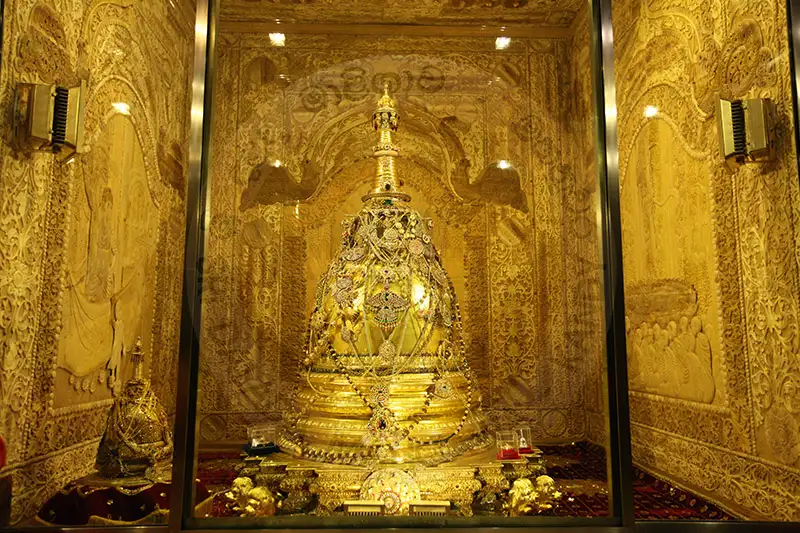
The relic is kept in a gold casket shaped like a stupa, housed within the inner chamber.
Witnessing the Daily Rituals (Pooja)
The inner chamber where the relic resides is opened to devotees during ritual offerings, known as **Pooja**. These ceremonies take place three times a day: dawn, noon, and dusk. Witnessing a Pooja, accompanied by drumming and traditional music, is a profoundly moving and essential experience for any visitor. While the relic itself is rarely seen (it is encased in seven golden caskets), the atmosphere of devotion and history is palpable.
Kandy's Other Gems: Lake, Gardens, and Culture
Kandy is charming outside the Temple walls too. The city center is dominated by Kandy Lake (Bogambara Lake), a tranquil body of water built in 1807. A gentle walk around its perimeter provides beautiful views. Just outside the city are the spectacular Royal Botanical Gardens, Peradeniya, featuring over 4,000 species of plants, including a magnificent collection of orchids. Kandy is also the host of the annual Esala Perahera in August, a massive, elaborate procession honoring the Sacred Tooth Relic.
Kandy's Last Stand
Kandy maintained its independence long after coastal regions fell to European powers, only succumbing to the British in 1815. This isolation allowed it to preserve ancient Sinhala customs, art, and architecture, distinguishing it culturally from the rest of the island. The city's heritage is visible in the Kandyan-style dance, woodwork, and the traditional Kandyan architecture seen throughout the palace complex.
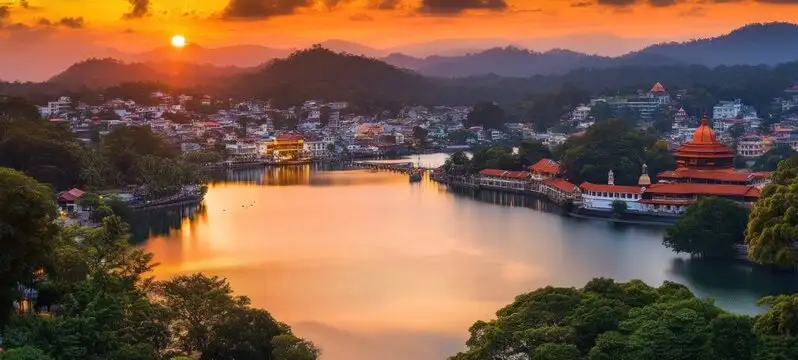
A quiet moment by the Kandy Lake, reflecting the city's calm spiritual atmosphere.