The Dambulla Cave Temple, also known as the Golden Temple, is the largest and best-preserved cave temple complex in Sri Lanka. This UNESCO World Heritage site is located on a massive rock rising 160 meters above the surrounding plains, offering both historical treasures and stunning views.
The Refuge of King Valagamba
The complex dates back to the 1st century BCE, when King Valagamba took refuge in these caves after being exiled from Anuradhapura. After reclaiming his throne, he consecrated the caves by turning them into temples as a gesture of gratitude. Subsequent kings continued to adorn the caves over the centuries, resulting in the astonishing collection of art visible today.
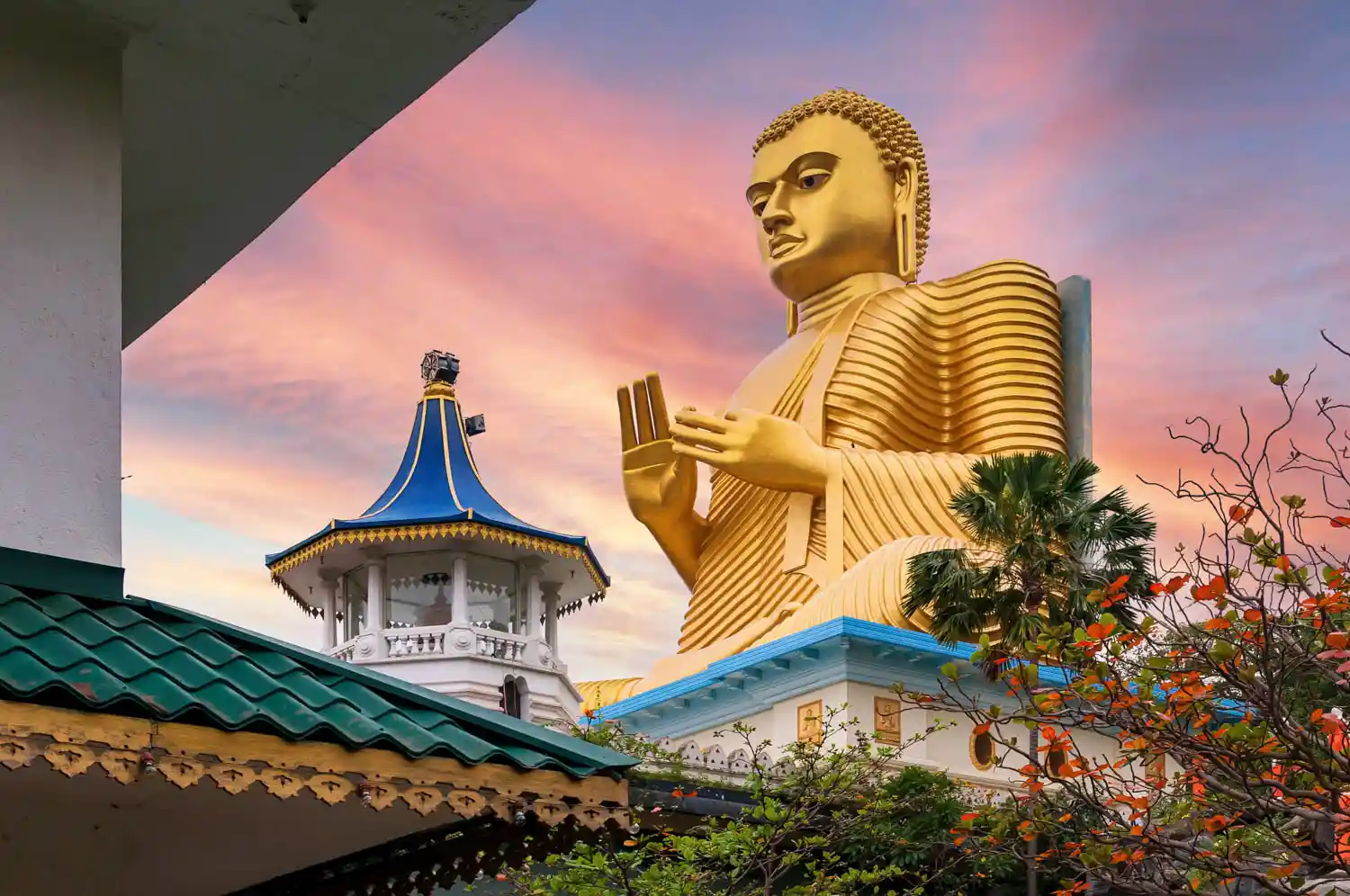
The Golden Temple complex at the base, easily recognizable by the large Buddha statue.
The Five Sanctified Cave Temples
The main temple complex consists of five separate caves, each possessing unique features and atmosphere:
- Cave 1 (Devaraja Lena): Dominated by a 14-meter-long reclining Buddha, carved out of the rock itself.
- Cave 2 (Maharaja Lena): The largest and most spectacular, containing over 50 Buddha statues and murals depicting the Buddha’s life.
- Cave 3 (Maha Alut Viharaya): Known for its stunning 18th-century Kandyan style ceiling murals.
- Caves 4 & 5: Smaller but equally significant, containing additional images and stupas.
A Canvas of History: Murals and Sculptures
Across the five caves, there are 153 Buddha statues, three statues of Sri Lankan kings, and four statues of gods and goddesses. The ceiling murals, painted directly onto the rock surface, cover a vast area and depict major events in the history of Buddhism and Sri Lanka. These murals have been carefully preserved and represent various eras of Sinhalese Buddhist art.
Climb for the Viewpoint
The climb to the temple entrance is a moderate ascent, but once you reach the top terrace, the effort is well worth it. From this vantage point, you can enjoy a breathtaking panoramic view of the surrounding dry zone, often including the iconic rock of Sigiriya, which is located only 20 kilometers away. This makes Dambulla a crucial stop within the Cultural Triangle circuit.
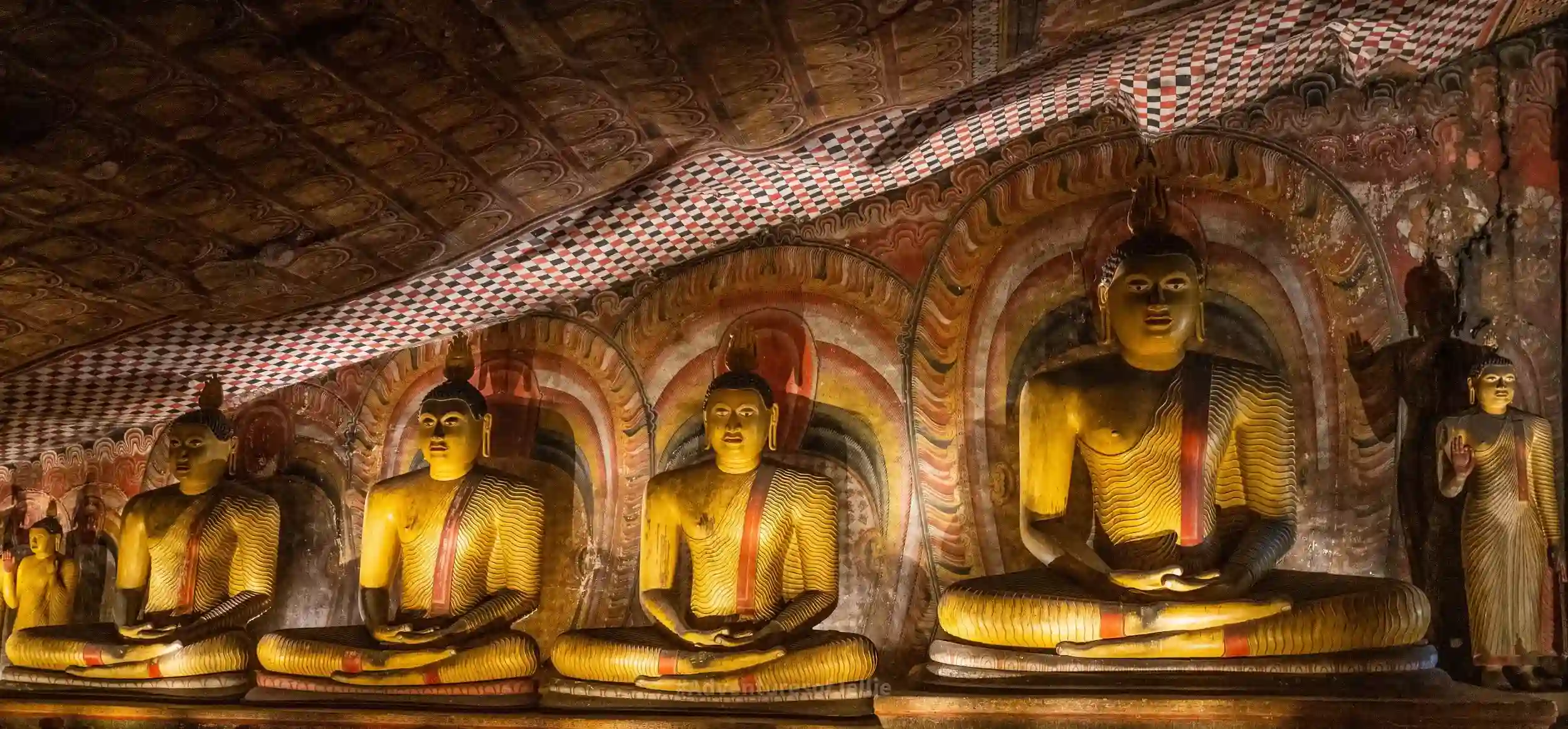
The vibrant interior murals and statues within the rock-cut caves.